Background
Hey gang, here’s another COMMS 101 assignment! I decided to analyze the campus devotional “How Will You Carry His Name?” by Abigail M. Allen using the lens of communication theories.
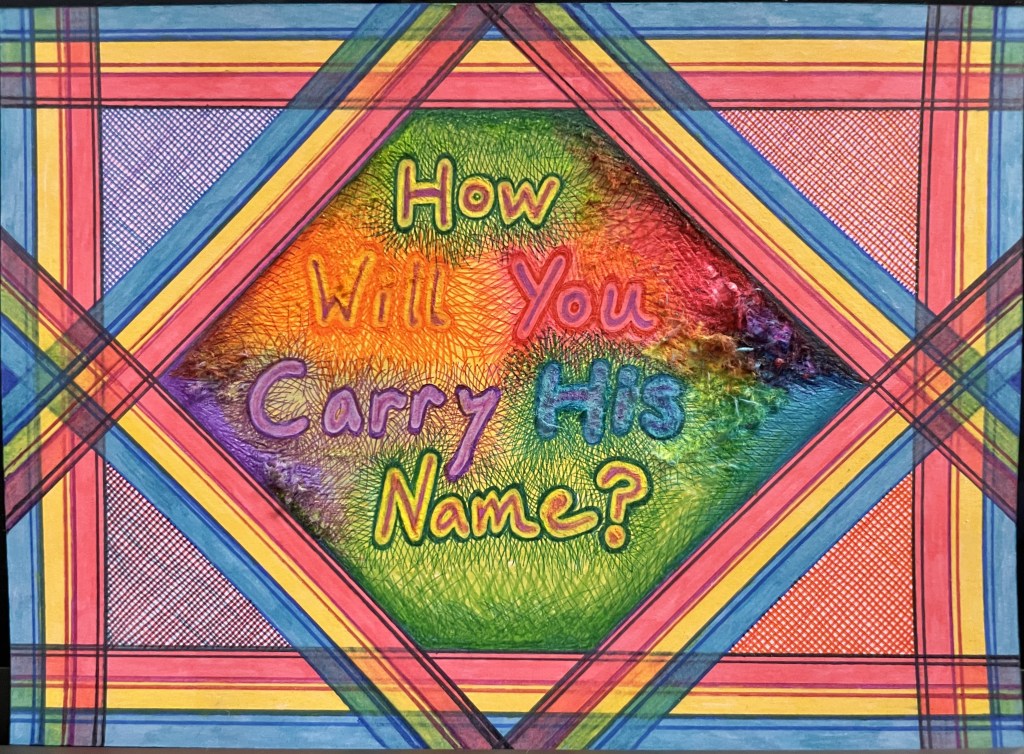
I watched and listened to this speech a few times while creating the cover art for this article. Without further ado, here are some Communication Theories and how I saw them involved in Professor Allen’s speech:
The Hypodermic Needle, a theory based on the assumption that all people are similarly controlled by biological instincts and they react more or less similarly to any stimuli (e.g. media) introduced to them. This theory of communication has been challenged by research like Hadley Cantril’s, who found that public reactions to The War of the Worlds (1938) were much more diverse and determined by the “situational and attitudinal attributes” of audience members than previously thought.

This theory, however, connects to the medium of Professor Allen’s message: a televised speech. Since the advent of social media, communication with content creators has become more accessible (e.g. we can comment on celebrities’ posts, these comments can gain traction and show up first in order beneath a post when many people have liked or replied to the comment). The Hypodermic Needle theory relates much better to traditionally broadcast media, like Allen’s speech, than to media shared on platforms like Instagram, X, or Facebook.

Social Identity Theory is the primary communication theory I noticed in play during Allen’s speech. This theory helps to explain “intergroup communication based on the inherent value humans place on social group memberships, and their desire to view their specific social groups in a positive light.”
Social Identity Theory postulates that our communication is affected by an intrinsic desire to feel a sense of belonging within our community. I saw this theory of communication incorporated through the way Allen addressed her audience using the pronoun “we” and determiner “our” to foster unity by relating herself to those listening to the devotional.

Narrative Theory suggests that “all meaningful communication occurs via storytelling or reporting of events” wherein people participate as storytellers and/or observers of narratives. Allen utilized the captivating nature described by narrative theory to help frame her speech within a story—that of setting boundaries in her professional life to maintain her desired level of religious commitment—so that she could efficiently gain the attention of her audience and keep it throughout her talk as they anticipated how her story would end.

The Spiral of Silence is a theory which states that one’s willingness to express opinions on controversial public issues is affected by their perception of the popularity of their opinions. Essentially, the spiral of silence theory suggests that we tend not to air opinions that we believe are unpopular to others, and tend to share opinions that we believe are popular with others. How does this play out in Allen’s devotional?
The spiral of silence occurs surrounding controversial issues with a strong moral component, such as religious topics like those discussed by Allen. Though I lack the data to comment on how Professor Allen’s speech was received by those who listened to it, studies could be conducted regarding its reception, particularly how in-line viewers perceived Allen’s teachings to be with the doctrines of The Church of Jesus Christ of Latter-day Saints.

Overall, it was fun to learn about these theories of communication and practice applying them in real life with Abigail Allen’s devotional “How Will You Carry His Name?” Thanks for reading!
References: Theories Covered in the 11th Edition of A First Look at Communication Theory, edited by Griffin, Ledbetter, & Sparks, and Encyclopedia Britannica.
 Scholls Fairy