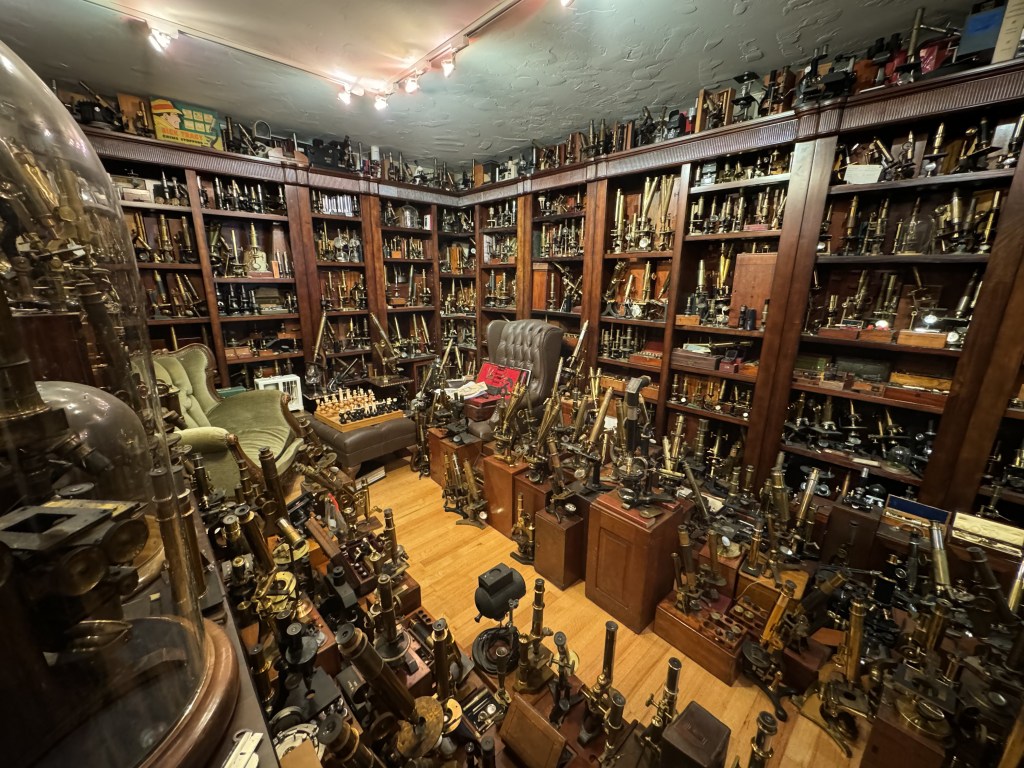
Beneath his Portland, Oregon home, Dr. Randy Watson has amassed a trove of scientific artifacts over 50 years in the making—including the self-proclaimed world’s largest privately owned antique microscope collection.
This basement-turned-museum has remained one of Portland’s best kept secrets since Watson moved to his current address in 1989. Since then, the underground assortment has flirted with the public eye (whilst eluding permanent fame) as the destination of local school field trips, church activities, and the subject of nationally syndicated news stories, including two episodes of PBS’ The Collectors and Personal FX: The Collectibles Show, respectively.
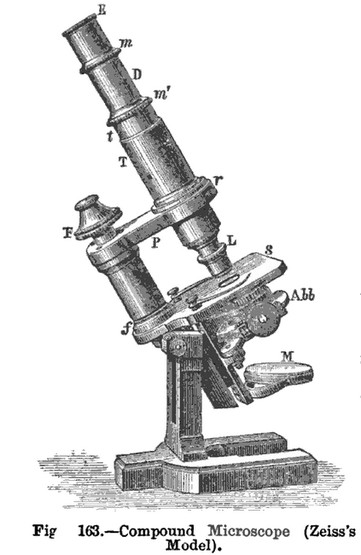
Watson’s story starts in fall of 1973 when the 18-year-old Linfield University freshman acquired his first microscope. “It was a beautiful Carl Zeiss, 1880s, expensive microscope. And we still used that model in Biology. You know, that’s all the school could afford, but they were amazing scopes and they worked just as good as anything modern,” said Watson.
While studying bioluminescent algae his first year in college, Watson discovered a broken microscope in the lab. “It was a hundred-year-old scope, so you couldn’t find parts for it,” explained Watson, who asked his professor, Dr. Charles Alt, if he could “play with it, and see if [he] could fix it,” receiving permission immediately as the tool was admittedly “junk,” Watson disclosed.
Still it was “love at first sight,” said Watson, “it just fascinated me.” A collector by nature, Watson picked up his next two antique microscopes at garage sales and fretted over number four until personal computers entered homes and e-commerce companies like eBay and AbeBooks facilitated the collection of historic medical and scientific paraphernalia.
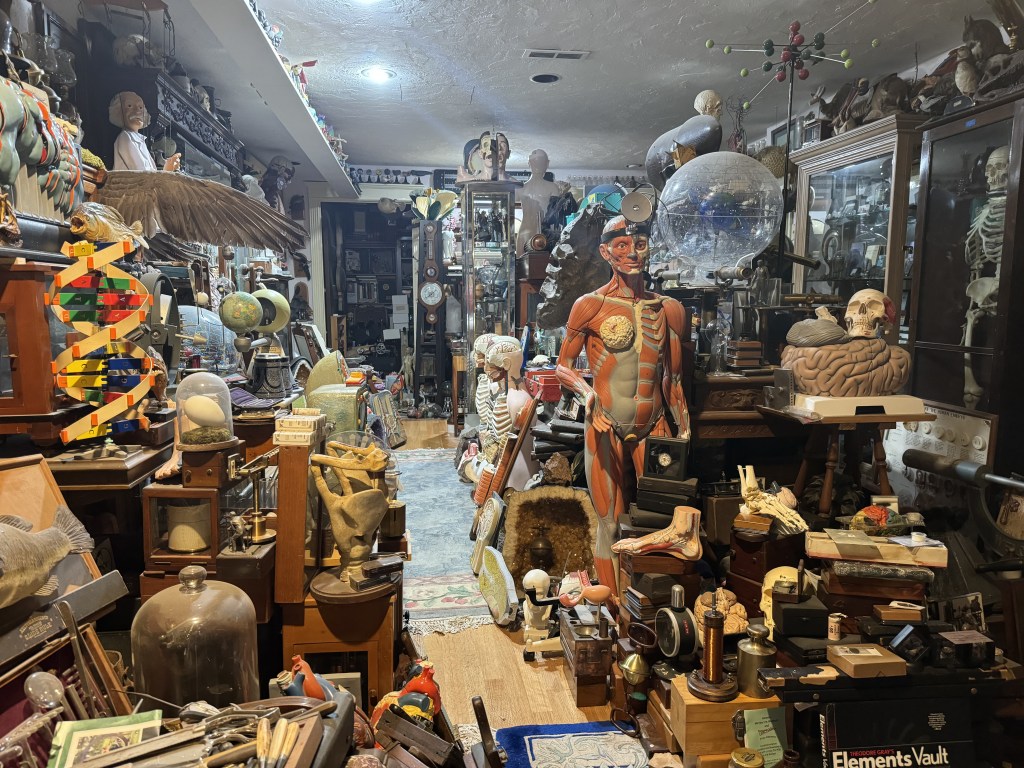
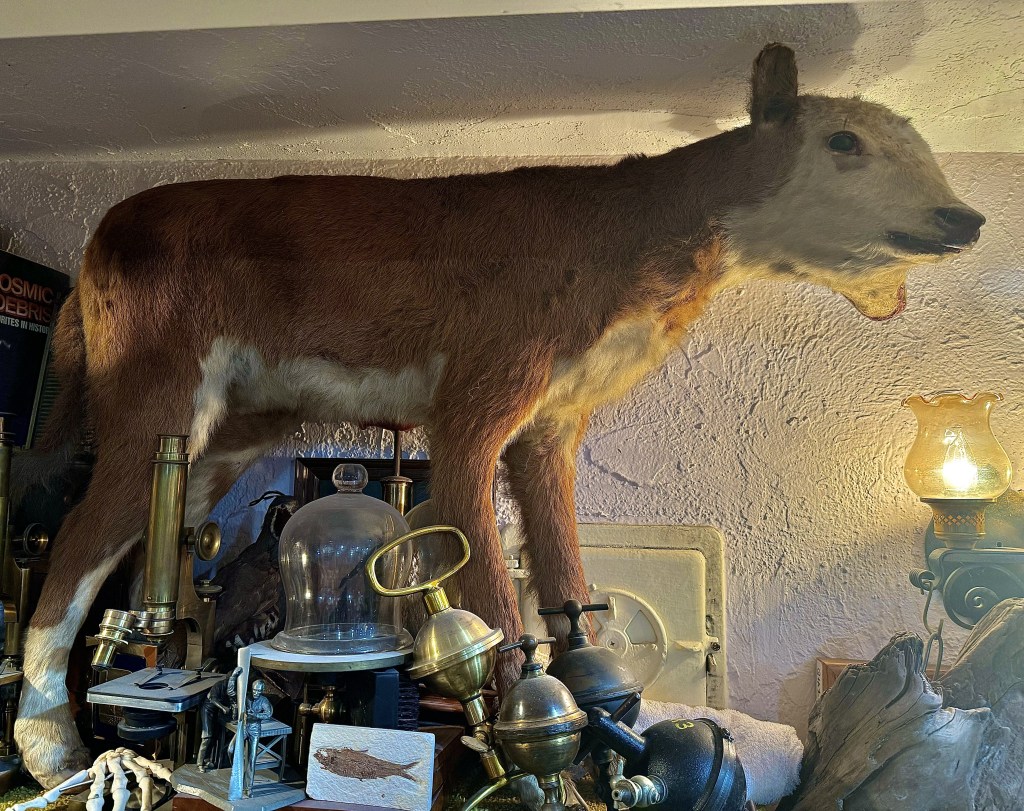
“Pre-internet, it was like pulling teeth,” Watson characterized the hunt for early microscopes. However, the mid-90’s saw Watson’s market grow from the PNW to the World Wide Web, allowing the doctor to funnel his spare earnings as a gastroenterologist into the accretion of antiquities from pharmacy equipment to Civil War amputation kits, anatomical models to meteorites, formaldehyde-soaked specimens, and of course, all the microscopes money could buy.
But Watson’s admiration for antiques has been criticized as an addiction by his wife and some acquaintances. “I’m sure it fits into some mental health qualification that he has a need to constantly be seeking for something,” said Wendy Watson, adding, “he likes the pursuit of a deal, and he likes to be getting something for nothing, meaning he pays $25 but it’s worth $150. That somehow fills some hole of discomfort or vulnerability that he feels. Every time he does it, he feels safe. It quells whatever that anxious hole is—and he has to keep feeding that. He’ll never have enough or want to stop [collecting] because it’s truly some kind of an addiction or obsessive thing.”
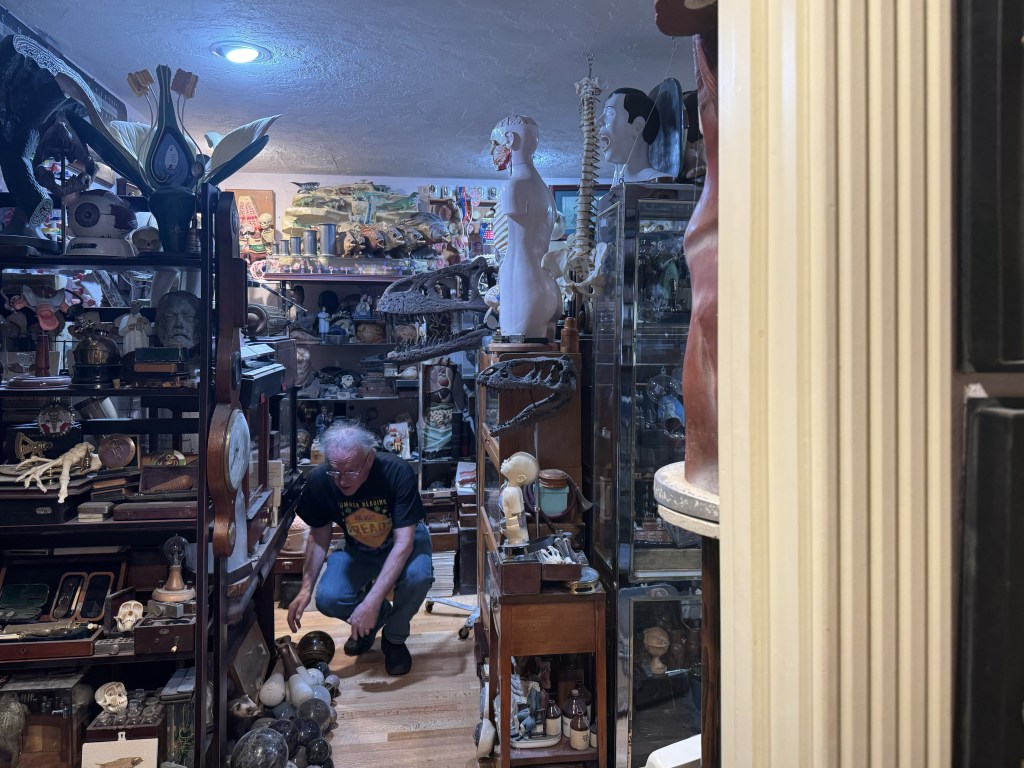
“If he were just collecting stuff for the purpose of having it accrue money and investment potential, he would, of course, not just collect things that he loves,” argued Wendy Watson. “He wants to be an important person,” explained Jeri Fuller, a family friend and patient of Dr. Randy Watson.
Above all, Dr. Randy Watson hopes to share his collection with the public. “People always say this should be in the Guinness World Record book, but you have to have someone come out and count them with you, and it would just be such a chore,” he laughed, “to actually prove I have the largest collection in the world—but I’d like to do that before I die.”
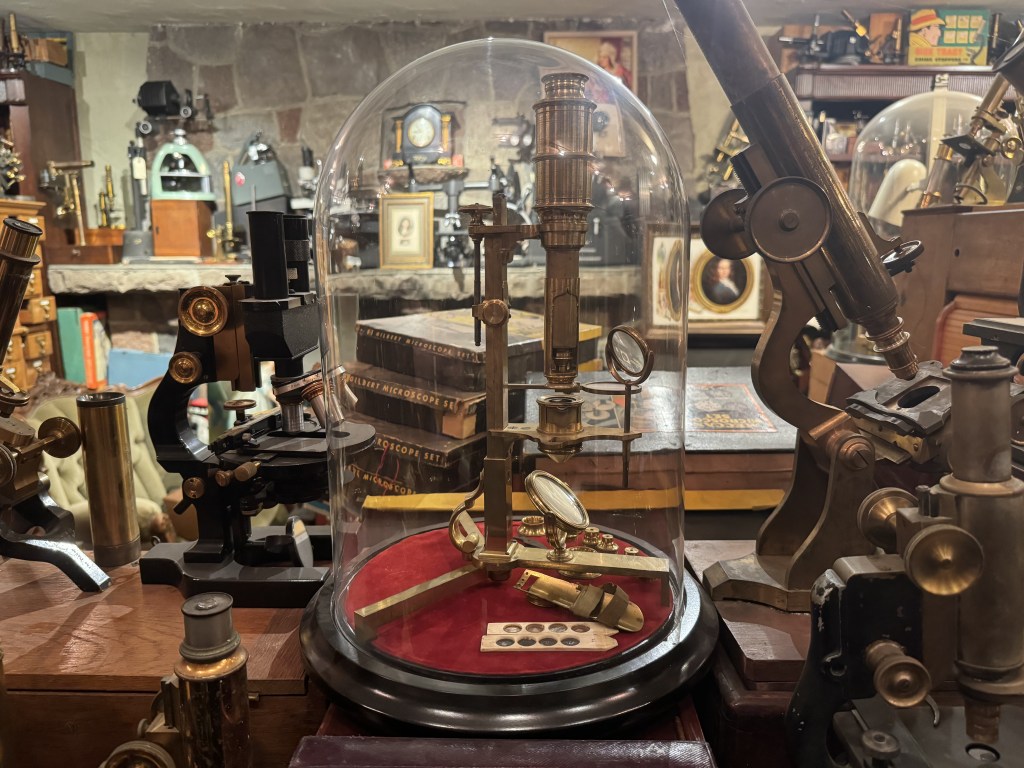
“I’ve tried to count ‘em a couple times, but you get an hour into it and go, ‘Oh crap, did I count that shelf? I think I counted that shelf. Oh crap, I gotta start over,’ so no, they’ve never been counted,” Watson confirmed.
After Watson’s retirement next year, he intends to schedule a meeting with Guinness representatives to get to the bottom of this jar of jelly beans and allow his collection to be enjoyed in print for years to come.
 Scholls Fairy